Posts

How much water is a good well?

Image
The answer to this question depends on your planned use, county requirements and the availability of water in the area where your property is located. In general counties require a minimum of 1 gpm sustainable production for a minimum of 4 hrs, banks that lend on homes are usually looking for a minimum of 2 gpm averaged over a 2 hr period. In order to determine how much water you need you first need to look at the number of faucets and fixtures in your home. Today’s American home usually has 2 bathrooms (1 faucet ea, 1 toilet, 1 shower = 3 fixtures) a full kitchen with a sink (1 fixture), a laundry room with washer/dryer and laundry sink (2 fixtures). If you put all that together, a home of this nature has approximately 9 fixtures installed. If you use low flow toilets, faucets and shower heads your demand out of each fixture is a little less than 2 gpm. So in this situation if you were to open every faucet, flush every toilet, turn on every shower in this home you would be using 18 gp...

Will there be a mess left at my property?

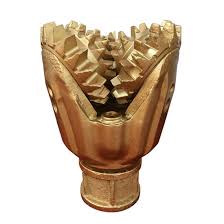
Well drilling is messy business. If you can imagine a young child making mud pies and cakes out in backyard that’s pretty much what our driller’s go home looking like on a daily basis. During the process of drilling we use water, dirt, mud alternatives, polymers and additives that mix with all of the returns that we are removing from your hole and it can be quite messy! If you are contracted for an air-rotary, hard-rock hole the mess made at your property will be much less. During the drilling process you will see granite cuttings or shavings that are being removed by our large air compressor, water run-off from the well itself or the water we are using as a part of the drilling process and most likely foam or dish-soap looking suds. Those suds are caused as a result of a lubricant that is used to keep the tooling moving in the hole and clean the hole while drilling. “Foam” as it is called in the drilling industry will not contaminate your well and just like doing the dishes, easily wa...

How long does it take to drill a well?

  The process of drilling a well can take as little as 4 days up to 4 weeks or more. This timeline is based on the type of drilling required, depth and diameter of the hole.  For a standard air-rotary rock hammer drilling job, the timeline can be quite short. A typical schedule is: Day 1: Move-in/Set-up of Equipment and preparation of the sanitary seal Day 2: Installation of the Sanitary Seal under the direction of county personnel and drilling of 60-200 ft. Day 3: Drilling and Installation of casing if well is less than 600 ft Day 4: If completed with drilling on previous day, clean-up and move out, if well is deeper than 600 ft continue drilling, can usually drill to around 800 ft. Day 5: Continue drilling if well is deeper than 800 ft, can drill to 900 ft (100 ft per day after 800 ft) For a standard mud-rotary, alluvial drilling job, the timeline is about a week. A typical schedule is: Day 1: Move-in/Set-up of Equipment and preparation of the sanitary seal Day 2: Installati...

What happens if my well collapses while drilling?

Image
We have previously discussed the variety of underground formations found in Southern California and this adds to the unpredictability of well collapse during drilling. A well collapsing while drilling can be attributed to the formation of the property in which work is being completed or it can be attributed to a driller’s lack of preparedness. Let’s talk about being prepared first. At Heritage Well we have a step-by-step process in our drilling practices that we previously discussed in another article HERE. In a planned hard-rock air-rotary hole our team ensures that we have casing on site, ready to be installed. Having casing readily available allows our team to quickly install it in the hole and often times will save a hole from collapsing.  If the hole does collapse and our team is unable to complete it before it does there are several options for completion available to you. The first and most common option is called a “mud clean-out.” Most drilling contracts in Southern Califo...

What is a casing schedule and who designs it?

Image
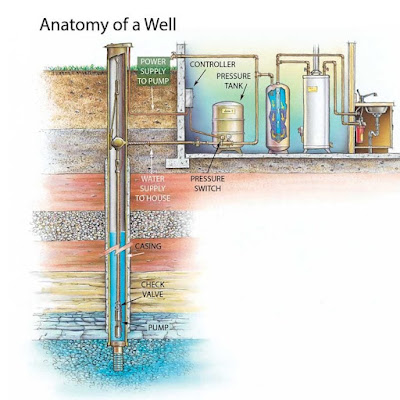
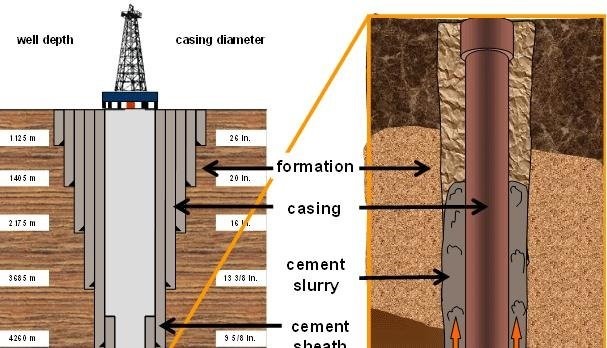
  To keep loose sand and gravel from collapsing into the borehole, it is necessary to use well casing and screen. The screen supports the borehole walls while allowing water to enter the well; unslotted or blank casing is placed above the screen to keep the rest of the borehole open and serve as a housing for pumping equipment. Since the well screen is the most important single factor affecting the efficiency of a well, it is sometimes called the “heart of the well.” Installation of well casing must avoid excessive bending or vertical (downward compressive or upward tensile stresses) that can deform or crack casing materials. Damaged casing can reduce the well’s integrity and make it difficult or impossible to install pumping equipment. It may also be difficult to remove equipment for well maintenance or equipment repair if the well casing is not installed properly. It is important to calculate this downward pressure when designing the casing schedule. Most casing manufacturers pro...

How deep does my well need to be?

Image
In our area of Southern California wells average in depth of 500 ft or so. Some wells are shallower and some are deeper. The depth of your well is a highly debated item among drillers, property owners, neighbors and those amongst us in the industry. The truth is that your well will be as deep as you need it to be. Confusing you ask? Well drilling in Southern California is diverse. There is a large variance in the underground formation dictating the depth and type of drilling you will need to complete a well on your property. It is important to do a significant amount of research on these items when generating your quote for drilling. A driller who spends time researching this information should be able to provide you with a good idea of well depths around your property, the average production, the type of drilling needed based on the formation and the proper casing design to complete a well. All of these items tie into your total cost and depending on your budget you may agree or disag...

Who Are the Top Well Drilling/Pump Installers in Southern California? (Reviews/Ratings)

Image
Every year at Heritage Well Service we meet with well over a hundred households in the Southern California area with respect to their well drilling and pump installation needs. And because so many folks know our thoughts and feelings on all things related to wells from this website, they often ask us, "Who are some of the other contractors and competitors in the area?" Never one to shy away from being blatantly honest about the competition, here is a list of some of the companies that have a solid footing in the Southern California area: LO Lynch Quality Wells and Pumps – LO Lynch specializes in well drilling projects of all sizes and large pump installation. They have been serving their community since 1945 hailing from San Jacinto and servicing all of Southern California. Stehly Brother’s Drilling Inc.- Having been in business since 1994, Stehly Brothers specializes in air-hammer drilling in the San Diego area. The company also installs water well pumps and storage tank sys...